

Grip Range Explained | Sherex by PEM Rivet Nut Selection Guide
Grip Range Explained
Grip range is one of the most important parameters in rivet nut selection. Choosing a rivet nut with a grip range that does not match the actual sheet thickness of the host material will result in either under-set (insufficient grip) or over-set (distorted body) installation, both of which compromise joint performance. This guide from Sherex® by PEM® explains what grip range means and how to select the correct product for your application.
What is Grip Range?
Grip range refers to the range of sheet material thicknesses over which a specific rivet nut can be correctly installed. It is defined by a minimum and maximum sheet thickness value and is determined by the distance between the underside of the rivet nut flange and the point at which the body correctly deforms to create the installation bulge.
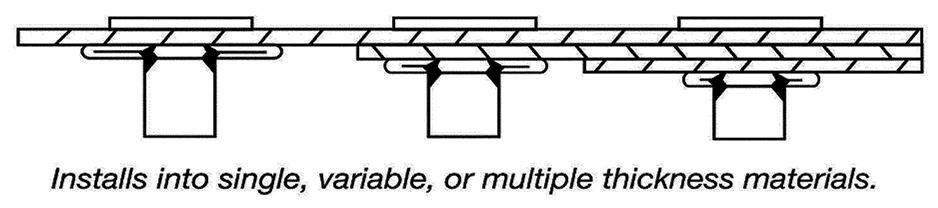
If the sheet material is thinner than the minimum grip, the rivet nut will over-set — the body will collapse too far, potentially distorting the thread or cracking the body. If the sheet is thicker than the maximum grip, the rivet nut will under-set — insufficient deformation will occur to create a secure mechanical interlock.
How to Measure Sheet Thickness for Grip Range Selection
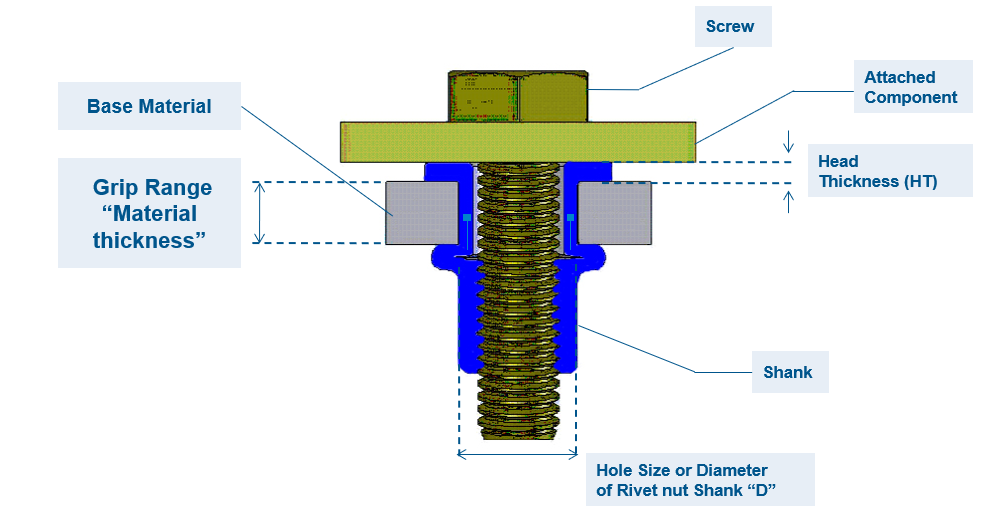
Measure the total clamped thickness at the installation point. This may be a single sheet or multiple layers of material that the rivet nut passes through. For multi-layer assemblies, the combined thickness of all layers must fall within the grip range of the selected rivet nut. Always check the minimum and maximum grip values on the product data sheet and ensure your application falls within this range.
Multiple Grip Ranges Within a Series
Many Sherex® by PEM® rivet nut series are available across multiple grip range variants — for example, a short grip range for thin sheet applications and a long grip range for thicker or multi-layer assemblies. The grip range is typically encoded in the part number suffix. Refer to individual product data sheets for the grip range breakdown for each part number.
Practical Tips for Grip Range Selection
- Always measure actual sheet thickness at the installation point — do not rely on nominal material specification
- For multi-layer assemblies, measure combined layer thickness including any gaskets or seals
- If in doubt, select the mid-point of the grip range to maximise installation tolerance
- Contact the Sherex by PEM technical team if your sheet thickness is close to the minimum or maximum grip range limit
➤ Contact the Sherex by PEM technical team for grip range selection support on your application.