

Rivet Nut Installation Guide | Sherex® by PEM® Step-by-Step
Rivet Nut Installation Guide
Correct installation is critical to achieving the specified performance from any rivet nut. This guide from Sherex® by PEM® provides step-by-step guidance on hole preparation, tool selection, installation procedure, and quality verification to ensure reliable, repeatable fastening in every application.

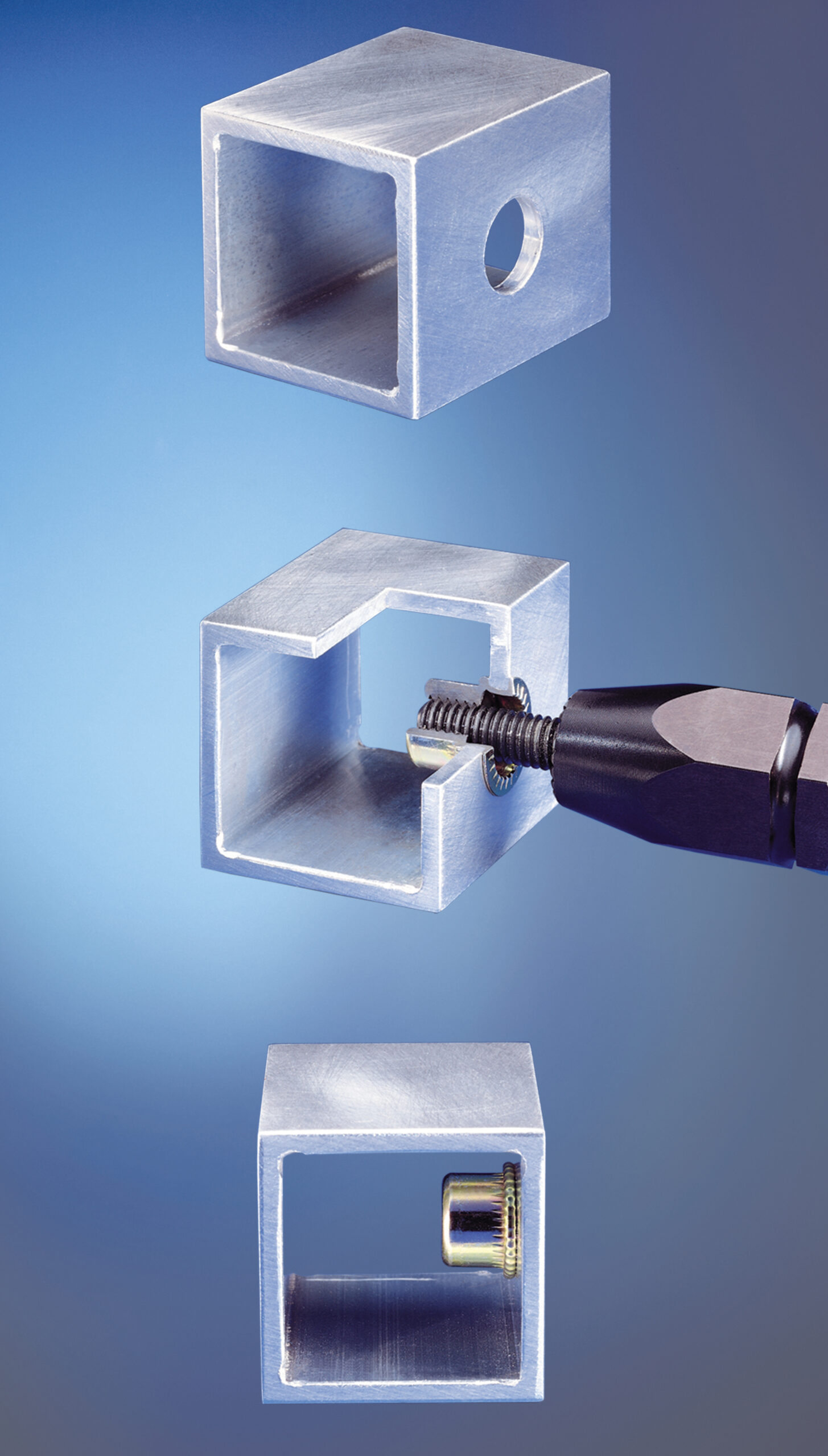
Step 1 – Select the Correct Rivet Nut
Choose the rivet nut series, thread size, material, and flange style appropriate for your application. Key factors include parent material type and thickness, required thread size, operating environment, torque requirements, and whether anti-rotation performance is needed. Refer to the Sherex by PEM product selector or contact the technical team for guidance.
Step 2 – Prepare the Correct Hole Size
Drill or punch the hole to the correct diameter for the selected rivet nut series and thread size. Using an incorrect hole size is one of the most common causes of poor rivet nut performance. Refer to the Sherex by PEM Hole Size Chart for recommended diameters. For full hex and half hex body types, prepare the correspondingly shaped hole using the appropriate punch.
Step 3 – Select and Set Up the Installation Tool
Choose the appropriate Sherex by PEM installation tool for your production volume and rivet nut specification. Install the correct nosepiece and mandrel for the selected thread size. Set the tool stroke to the correct depth for the rivet nut grip range. Verify tool calibration is current before commencing installation.
Step 4 – Install the Rivet Nut
Thread the rivet nut fully onto the mandrel. Insert the rivet nut body fully into the prepared hole. Ensure the flange is correctly seated against the material surface. Operate the tool to complete the installation stroke. The rivet nut body will deform behind the material, creating the mechanical interlock that holds the nut in place.
Step 5 – Verify Installation Quality
After installation, verify that the flange is flush and correctly seated, the rivet nut does not spin or pull out under manual check, and the thread is clean and accepts a mating fastener without resistance. For process-critical applications, use the Sherex by PEM RIV943 process monitoring tool to verify installation force and displacement on every cycle.
Common Installation Issues and Solutions
- Under-set rivet nut (insufficient grip): Check hole size, tool stroke, and rivet nut grip range selection
- Over-set rivet nut (distorted thread or cracked body): Reduce tool stroke and verify pull force setting
- Spin-out under torque: Review body style — consider full hex, half hex, or Optisert® for better anti-rotation
- Rivet nut pulls through material: Check flange size relative to material hardness — consider large flange variant
- Thread damage on installation: Verify mandrel condition and thread engagement depth
➤ Contact the Sherex by PEM technical team for application-specific installation guidance.